1. Post-it immersion: turn your home into a vocab trainer
Stick post-its on every object in your home. Important: only the target-language word. Not "door = puerta", just "la puerta". You'll see the word 20 times a day without effort. Your brain links it to the object, not to the translation.
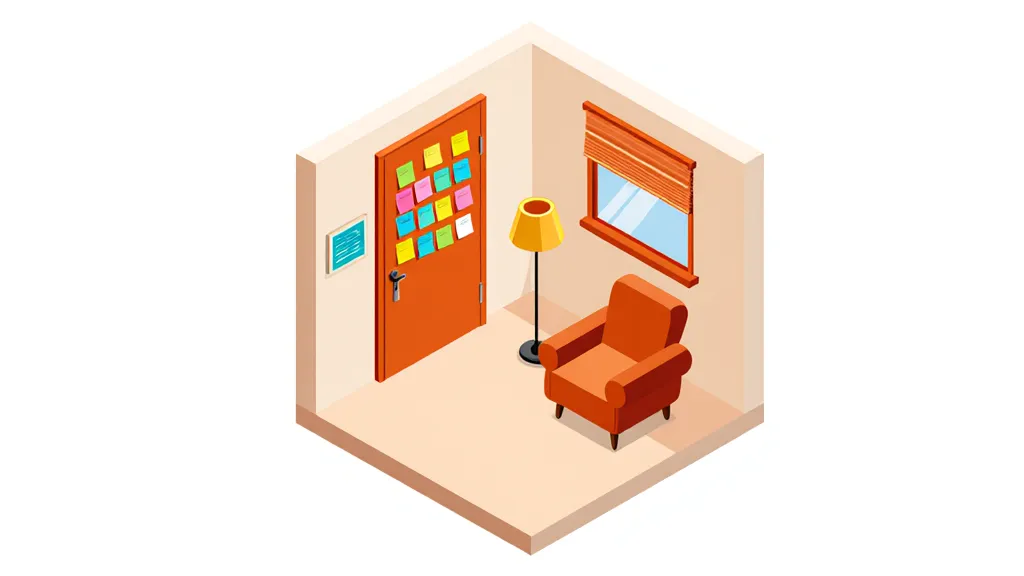
Post-its on every piece of furniture: your brain links the word to the object, not the translation.
Sounds simple, it's the direct method in pure form. Studies show: words tied to a concrete context are remembered 2× better than plain vocab lists.
How to do it: Grab 20 post-its and a pen. Walk through your home. Anything you don't know, look up – once. Stick it. After 3 weeks you know the words without studying.
2. Voice memos as low-tech spaced repetition
Record yourself saying 10 words – each with an example sentence. Listen during commute, cooking, jogging. Next week: a new recording with the words that stuck poorly.
Why it works: you hear your own voice. The brain treats own recordings differently from external material – more attention, a touch of embarrassment. Result: better focus, better recall.
3. Handwritten vocab journal: why pen beats keyboard
Every evening: 5 new words + one sentence with each. With a pen, not a keyboard. Sounds 19th-century – but it's research gold.
A 2014 Princeton study nailed it: handwritten note-takers recalled content better than typists. Handwriting fires up sensorimotor brain regions that typing leaves idle.
How to do it: A simple notebook. A pen. 5 words a day. In 3 months you have 450 words – more than the average tourist will ever use.
4. Language walk: 15 minutes describing out loud
Go for a 15-minute walk and describe what you see – in the target language. "Veo un árbol. Es grande. Hay pájaros. El cielo está azul." Feels weird? Yes. Works anyway.
You do three things at once: perceive, translate, speak. Every connection gets reinforced. You also discover which words you're missing – "Wait, how do you say 'cobblestone'?" Note it, look it up later.
5. Tandem paper game: gamification without an app
Meet a tandem partner. Each of you writes 10 words on separate slips. Turn the 20 slips face down, take turns drawing – and form a sentence with the drawn word, fast. Whoever stalls, loses the slip.
It's fun, costs nothing, beats Quizlet on two phones. You practise active production in a low-stakes setting – exactly what you need to actually use vocab in conversation.
When is low-tech actually worth it?
- When you're screen-fatigued. Eyes rest, the language doesn't.
- When you want more bodily presence. Writing + speaking lights up more.
- When you study with others. Apps isolate, slips connect.
- When you travel offline. A notebook always fits.