How native speakers think
A native hears "casa" and sees directly a house. No translation. No middleman. That's called a direct word-to-meaning link. That's the link you want to build.
When you learn "casa = house", you build a detour link: target-language word → native word → meaning. It works short-term, but:
- You take 2–3× longer per word when listening
- Complex sentences overwhelm you because every word makes a detour
- You're stuck at textbook level
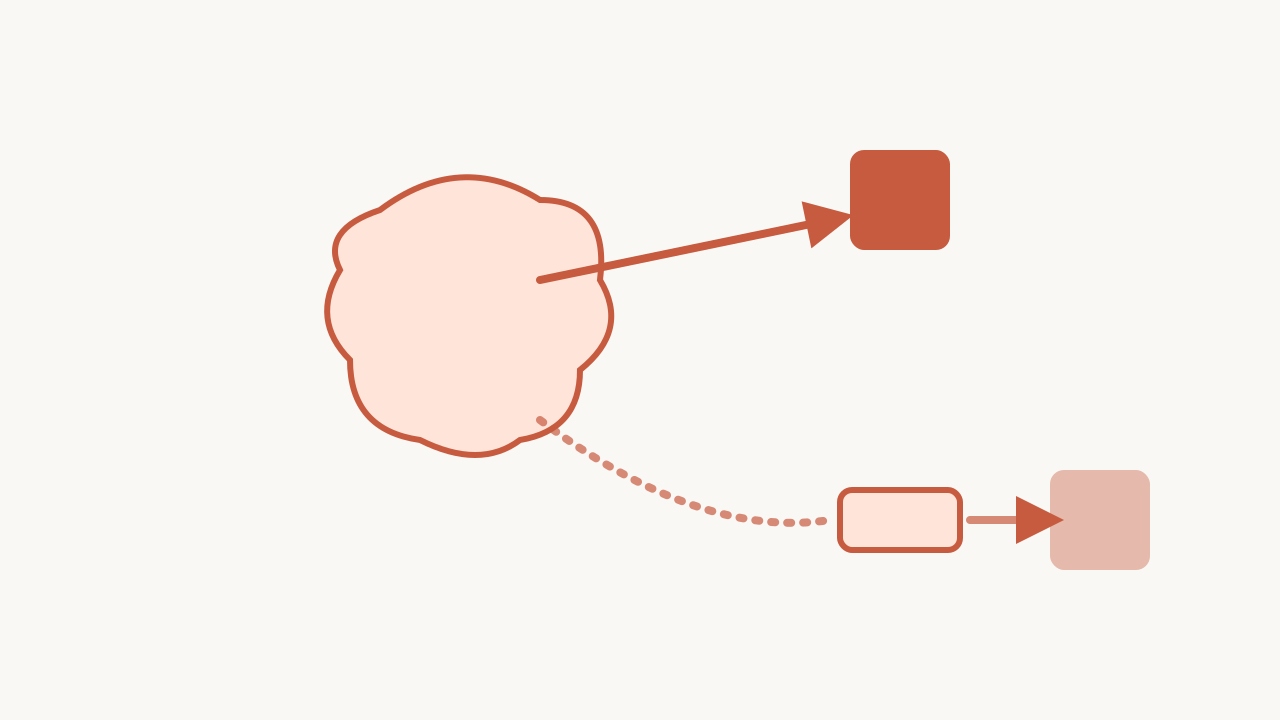
Direct route: word → image. Detour: word → translation → meaning. The detour costs time, every time.
Image-based vocabulary: the three-piece solution
Instead of "casa = house" you learn:
- An image of a house + the word "casa"
- Example sentence: "Mi casa es pequeña" (with a photo of a small house)
- Synonyms/antonyms: "casa" vs. "apartamento", "grande" vs. "pequeña"
When translations are actually fine
Abstract concepts are hard to draw. How do you sketch "although"? Here short translations or, better, contextual examples are the answer:
- "Although it rains, I go out." → 1 translation, then only context sentences
- Connectors (and, but, because, although) – yes, translate, but switch to sentences quickly
- Concrete nouns (house, table, dog, apple) – never translate, always image
How to find good images
- Google Images in the target language: Search "casa" on Spain's Google. You'll get images a Spanish person associates with the word – not an English speaker.
- Unsplash, Pexels: Royalty-free stock photos
- Your own photos: Strongest memory – "mi casa" with a photo of your actual house
Common objections
"But I have to translate if someone asks me what it means." True – but that's explaining, not storing. In your head you have an image; you translate on the spot for the explanation.
"What about verbs?" Verbs are learned with short clips or descriptive sentences: "correr" = a person running + "Yo corro todos los días". Not: "correr = to run".