"/ˈfʌn.ə.tɪks/" – that's "phonetics" in IPA. Looks like a maths textbook and scares off 95 % of learners. But as a language learner you don't need the full IPA – only the symbols of your target language. That's about 30.
What is the IPA and what's it for?
The International Phonetic Alphabet is the universal phonetic notation of linguistics. One simple rule: one symbol = one sound. No "c" that's sometimes "k" and sometimes "s". No vowels that change by the day.
In the dictionary you see it in square brackets: schön (German) = [ʃøːn]. The "ʃ" is the "sh" sound, the "øː" is a long German "ö". Don't guess – see.
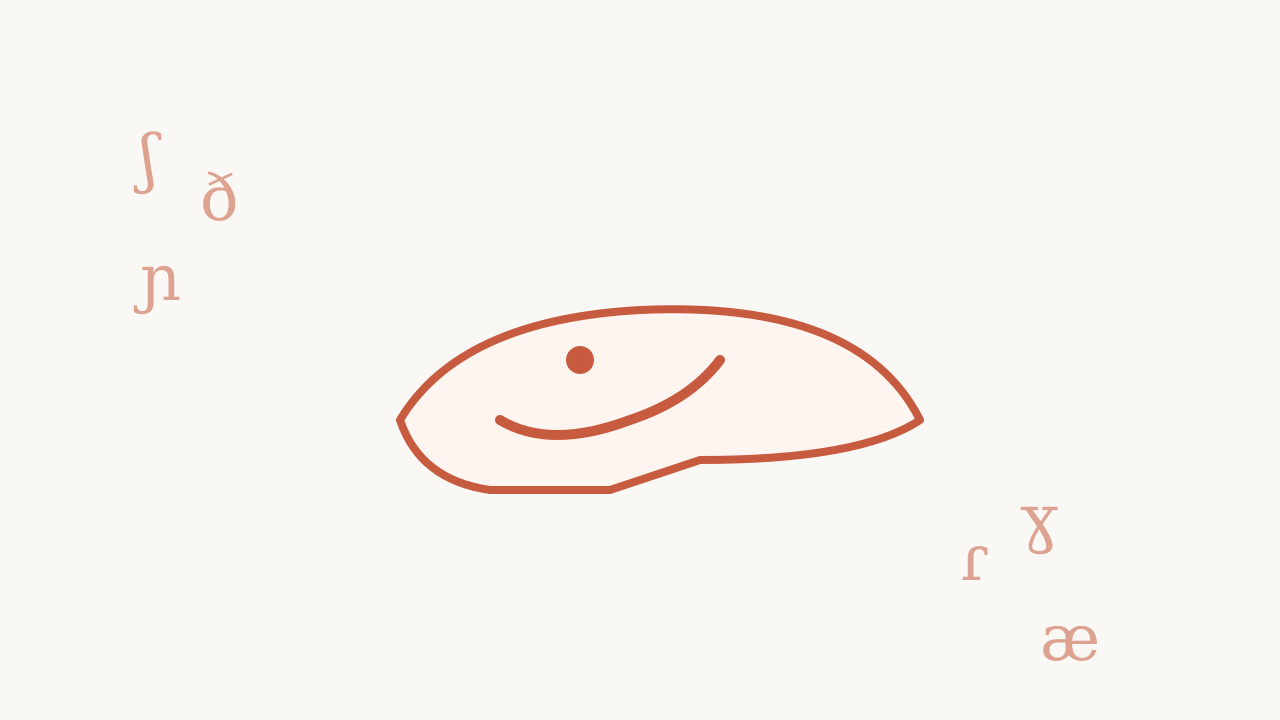
IPA symbols have a physical meaning: they show where your tongue should be.
Is IPA actually worth it?
Yes – but not for everyone. You need IPA if:
- Your target language has sounds your mother tongue doesn't know
- You want to look up new words in the dictionary and know how they sound
- You're going to do minimal-pair training systematically
You don't need it if:
- Your target language is phonetically close (e.g. Dutch for German speakers)
- You only want tourist-level conversation
IPA for English speakers: 30 symbols to start with
For learning Spanish you need few symbols – Spanish is phonetically simple. The essentials:
- Vowels (5): a, e, i, o, u – each a clear sound, no length variation
- Consonant specialties: ɲ (ñ), r (tap), rr (rolled), x (j as in "jamón"), ð (soft d), ɣ (soft g)
- Diphthongs: ja (ya), je (ye), ju (yu) – like English "ya", "yes"
📐 Rule of thumb: If you know your target language's symbols (Spanish: ~25, German: ~40), you can pronounce any dictionary entry correctly – even one you've never heard.
How to learn IPA efficiently (a week is enough)
- Open an interactive chart (e.g. ipachart.com) – every symbol has audio
- 3–5 symbols per day: listen and repeat
- Note examples: symbol → word → audio (a simple notebook works)
- After 2 weeks you read dictionary transcription fluently
Common misconceptions
- "IPA is only for linguists." Wrong. It's a tool. You don't have to be a musician to read notation.
- "I can recognise sounds from spelling." Yes – in your mother tongue. In the target language spelling often lies (English: tough, though, through).
IPA where you need it
In NoHablasEspanol you see IPA next to every word – optional, expandable, with native audio. No need to learn a whole extra language.
Explore vocabulary →